
Coral Restoration
Photo 1. Reef off Petit St Vincent after 5 years of coral restoration (2017-2023). All the corals in the photo were gown in our nurseries and outplanted on reefs with virtually no live coral cover and comprised almost entirely of dead coral rubble.
Summary
CLEAR has been implementing community-based coral restoration programmes in St Vincent and the Grenadines (SVG) and St Lucia since 2017. We are just one of many organisations involved in coral restoration worldwide, with a focus on providing both short-term benefits while also increasing the long-term resilience of these ecosystems to the impacts of climate change. We are guided by leading scientists and practitioners, such the pioneering work of Austin Bowden Kirby (see recent paper and summary) and Fragments of Hope in Belize
While coral restoration is still relatively new there is a growing body of evidence that coral restoration, when practiced correctly and at suitable locations, can significantly increase coral cover, fish biomass, biodiversity and the genetic diversity of coral reefs [see reviews 1-5]. These ecological changes will increase the value of the ecosystem services that reefs provide to local communities that depend on them, in particular fisheries, tourism and coastal protection. In addition to these benefits, coral restoration can also provide direct livelihood opportunities to local communities, as well as social and educational benefits. Evidence of these different benefits are summarised below.
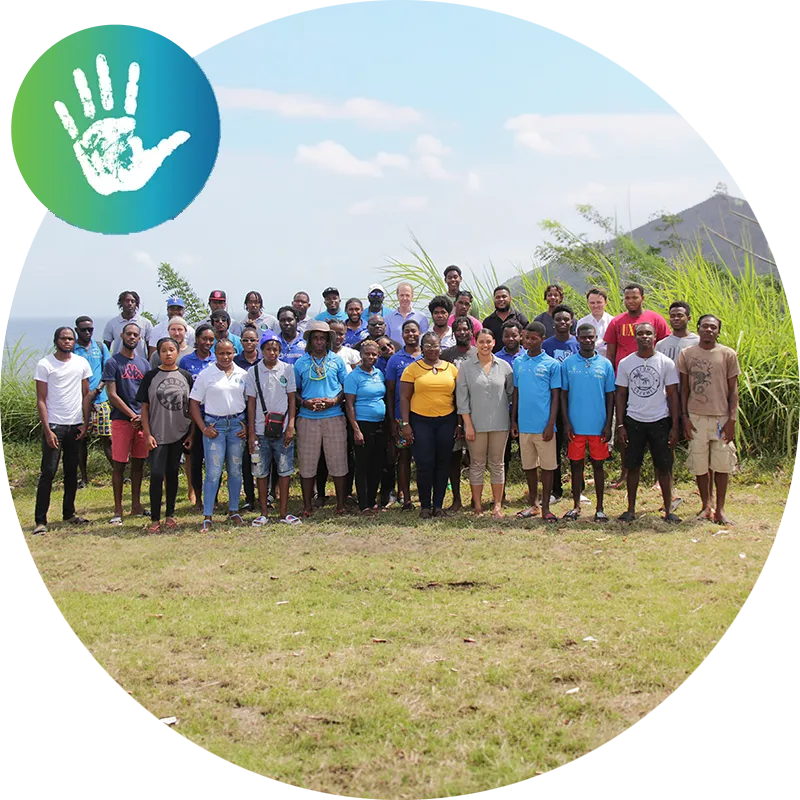
Photo 2. Coral gardeners and partners at the 2023 workshop held at the Richmond Vale Academy
Community-based approach
Based on the success of our work in St Lucia and in around Petit St Vincent between 2017 and 2021 (see completed and current projects), CLEAR has received grants in 2021 and a follow on in 2023 from the Caribbean Biodiversity Fund’s Ecosystem-Based Adaptation Facility, supported by the Government of Germany through the German Development Bank (KfW) with resources from the International Climate Initiative (IKI) of the German Ministry of the Environment, Nature Conservation and Nuclear Safety. These grants have enabled us to expand and replicate successful models of community-based coral restoration in Saint Lucia and in St Vincent and the Grenadines.
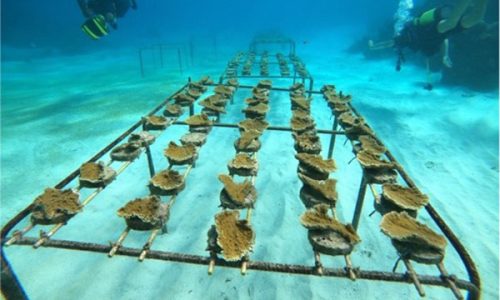
Photo 3. We use tables in shallow nursery sites (TCMP, PSV, Union)
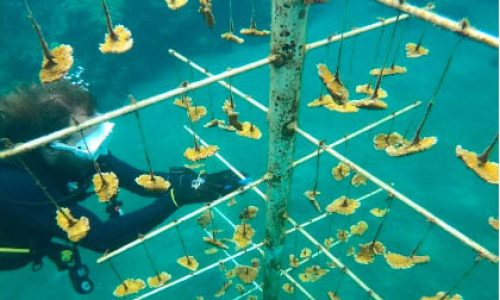
Photo 4. Trees in deeper more exposed sites (St Lucia and Cumberland SVG)
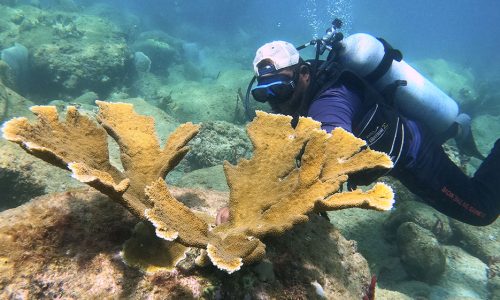
Photo 5. Outplanted elkhorn coral in St Lucia with Chester Nathoniel
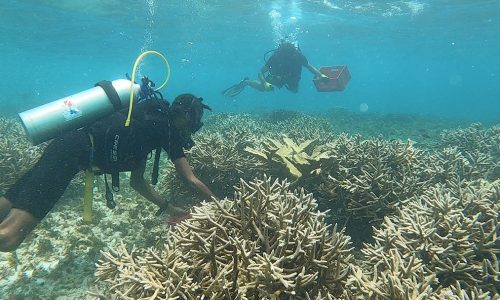
Photo 6. Community coral gardeners from Union working on the outplanted reef off Petit St Vincent.
Increased value in ecosystem services for fisheries and food security
At the specific project sites in St Lucia and in St Vincent and the Grenadines, we strongly anticipate that the project will increase the value and resilience of ecosystem services provided by coral reefs to local fisheries. It is well established in the literature that the availability of complex coral reef habitat is a prerequisite to abundant and diverse coral reef fish assemblages [5]. Similarly, the lack of coral habitat was as a major cause of the decrease in Caribbean reef fish populations [6].
The restoration of elkhorn and staghorn corals on degraded reefs has been shown to increase coral cover and reef rugosity, as well as fish biomass and marine biodiversity in 3-4 years, at many sites in the Caribbean and Latin America [1,2,3,4,5; see also photos from Belize, St Vincent and the Grenadines and St Lucia in 12,13,14 15]. The increases in fish biomass, will ultimately help support local reef fish populations, and hence reef fisheries, and thus improve food security, catches and revenue of fisherfolk.
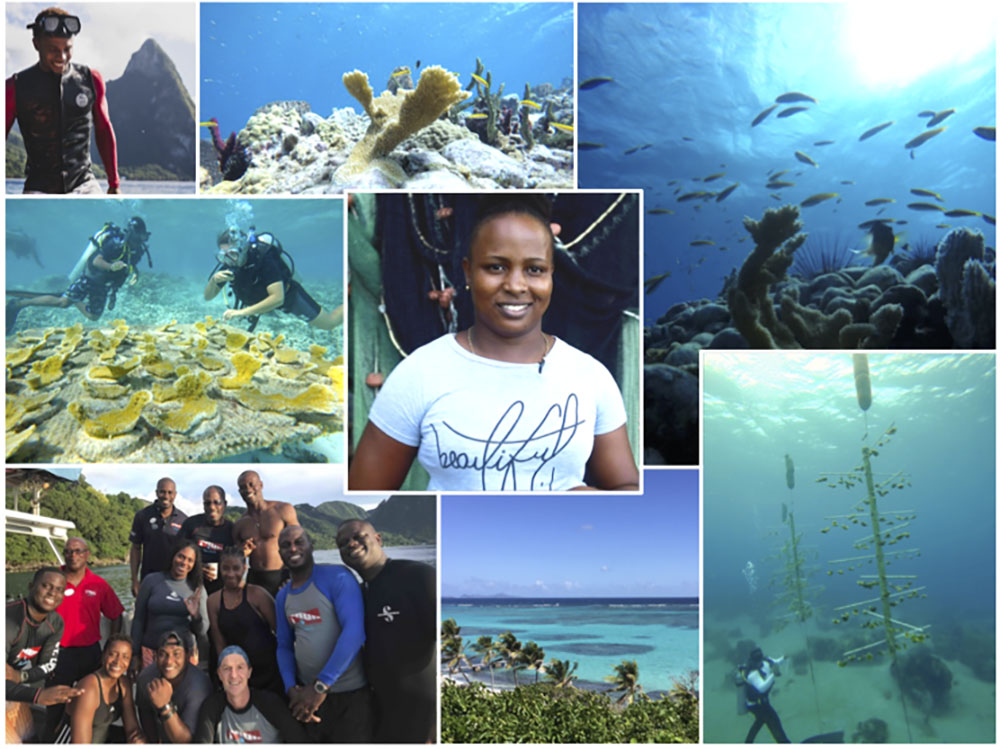
Snapshots of our coral gardeners and nursery sites.
Increased value in ecosystem services for tourism
Coral restoration can also improve the value of reefs to the tourism sector by increasing the amount of live coral, fish biomass and biodiversity at popular snorkelling and diving sites. A review by DeGroot at al. [21] found that the ecosystem services provided by coral reefs were greater than any other ecosystem by an order of magnitude, with a median value of over US$300,000 per year per hectare. Much of this value stemmed from the role of coral reefs as tourism attractions.
Coral nurseries and restoration activities in themselves can also be marketed as a tourism attraction and provide livelihood opportunity for coastal communities. CLEAR has developed a PADI Speciality Dive with Sandals Resorts International [18,19,20], which we will launch in St Lucia when tourism restarts after the pandemic. Many Scuba diving centres are interested in coral restoration because their customers are increasingly keen to contribute to the preservation of coral reefs. There are many resorts worldwide where visitors can “adopt a coral”. This project will develop similar mechanisms to engage the private sector.
New livelihoods and socio-economic benefits for local communities
Our approach is particularly focused on developing community-based coral restoration as a tourism attraction that supports livelihoods for local coral gardeners based in coastal communities. This is the model CLEAR has developed and operates in St Lucia [14,15]. In order to make coral restoration accessible as a livelihood to vulnerable fishing communities, CLEAR developed a National Vocational Qualification in Coral Reef Restoration [16] in collaboration with the Basic Needs Trust Fund of the Caribbean Development Bank and the Ministry of Education in the Government of St Lucia. This NVQ was originally a Level 3, and subsequently a simpler Level 2 NVQ was also developed [17]. Both these NVQs will soon be converted to CARICOMn Vocational Qualifications, which will help promote opportunities for local people and access to training and socio-economic benefits from new livelihoods in coral restoration throughout CARICOM. There are also many manuals and guides on coral restoration that can provide additional or complimentary information to practitioners and facilitate educational and research opportunities local people and students [for example see 9,10,11].
Increased coral genetic diversity and climate resilience
The aim of our programmes is not only to recover depleted reefs and increase ecosystems services at target sites, but also to increase the climate resilience of restored coral populations on a wider scale. It will do this by following recommendations from top coral genetics who have stated that “restoration programmes that capture much of the local genetic variation of coral populations could contribute significantly to the potential of corals to adapt to a warming ocean” [7].
The project partners will outplant corals in clusters of numerous genotypes (or genets) with high allelic genetic diversity. Genetic diversity is also important to improve fertilisation rates during annual spawning events, and thus help replenish surrounding reef areas with millions of fertile eggs with high genetic diversity. Spawning of outplanted corals has been documented by many restoration practitioners, including CLEAR [14].
The goals of coral restoration as an EbA intervention in this project will therefore be twofold. At a local scale our aim is to increase coral cover and ecosystem services to provide benefits to local communities. On wider spatial and temporal scales, our aim is to contribute to the adaptation of targeted coral species to climate change, both locally and throughout their range.
Dr Owen Day
References
Reviews of coral restoration:
- Young CN, Schopmeyer SA, Lirman D. 2012. A review of reef restoration and coral propagation using the threatened genus Acropora in the Caribbean and Western Atlantic. Bulletin of Marine. Science 88(4):1075–1098 DOI 10.5343/bms.2011.1143.
- Lirman and Schopmeyer (2016), Ecological solutions to reef degradation: optimizing coral reef restoration in the Caribbean and Western Atlantic. PeerJ 4:e2597; DOI 10.7717/peerj.2597
- Bayraktarov E, Banaszak AT, Montoya Maya P, Kleypas J, Arias-Gonza ́lez JE, Blanco M, et al. (2020) Coral reef restoration efforts in Latin American countries and territories. August 2020. PLoS ONE 15(8):e0228477
- Bostrom-Einarsson L, Babcock RC, Bayraktarov E, Ceccarelli D, Cook N, Ferse SCA, et al. (2020) Coral restoration – A systematic review of current methods, successes, failures and future directions. PLoS ONE 15(1): e0226631. https://doi. org/10.1371/journal.pone.0226631
- Seraphim MJ, Sloman KA, Alexander ME, et al. Interactions between coral restoration and fish assemblages: implications for reef management. J Fish Biol. 2020;97:633–655. https://doi.org/10.1111/jfb.14440
- Russ, G. R., J. R. Rizzari, R. A. Abesamis, and A. C. Alcala. 2021. Coral cover a stronger driver of reef fish trophic biomass than fishing. Ecological Applications 31(1):e02224. 10.1002/eap.2224
Long-term genetic benefits to corals
- Baums, I. B., A. C. Baker, S. W. Davies, A. G. Grottoli, C. D. Kenkel, S. A. Kitchen, B. Kuffner, T. C. LaJeunesse, M. V. Matz, M. W. Miller, J. E. Parkinson, and A. A. Shantz. 2019. Considerations for maximizing the adaptive potential of restored coral populations in the western Atlantic. Ecological Applications 29(8):e01978. 10.1002/eap.1978
- Bowden-Kerby A. and Carne L. 2012. Thermal Tolerance as a factor in Caribbean Acropora Restoration. Proceedings of the 12th International Coral Reef Symposium, Cairns, Australia, 9-13 July 2012
Coral restoration Guides and Manuals– see full list here
- Goergen, E.A., S. Schopmeyer, A.L. Moulding, A. Moura, P. Kramer, and T.S. Viehman. 2020. Coral reef restoration monitoring guide: Methods to evaluate restoration success from local to ecosystem scales. NOAA Technical Memorandum NOS NCCOS 279. Silver Spring, MD. 145 pp. doi: 10.25923/xndz-h538
- Meaghan E. Johnson, Caitlin Lustic, Erich Bartels, Iliana B. Baums, David S. Gilliam, Elizabeth Anne Larson, Diego Lirman, Margaret W. Miller, Ken Nedimyer, and S. Schopmeyer. 2011. Caribbean Acropora Restoration Guide: Best Practices for Propagation and Population Enhancement : 1 -64. https://nsuworks.nova.edu/occ_facreports/71.
- Fragments of Hope. 2012. Coral Reef Replenishment Guide. https://www.dropbox.com/s/0iz6rshfxewapn0/coral%20training%20manual%20fohred.pdf?dl=0
Photographic evidence of ecological change and spawning
- Fragments of Hope. Belize. http://fragmentsofhope.org/
- Timeline Presentation of restored reefs around Petit St Vincent
- CLEAR Caribbean. Final Report, March, 2020. Public-Private Partnership for the Saint Lucia Coral Restoration Programme for Resilient Ecosystems and Sustainable Livelihoods. 2020
- The St Lucia Coral Gardeners: Building Resilient Reefs and Communities. https://www.youtube.com/watch?v=FEdJsSX3E7o&t=31s
National Vocational Qualification
- St Lucia National Vocational Qualification (SLNVQ) Competency Standards in Coral Reef Restoration, Level 3. 2018. Funded by the Caribbean Development Bank and the Ministry of Education, Government of St Lucia
- Saint Lucia National Vocational Qualification (SLNVQ) Competency Standards In Coral Reef Gardening And Restoration, Level 2
Tourism engagement
- Training Manual Coral Nursery Diver Distinctive Specialty. February 2020. Training manual developed by CLEAR and Sandals Watersports and approved by PADI
- Coral Nursery Diver Distinctive Specialty Instructor Outline. Training outline developed by CLEAR and Sandals Watersports and approved by PADI
- CLEAR is a solution provider and has shared our success story on PANORAMA´s Costal and Marine Portal, coordinated by the Blue Solutions Initiative. https://panorama.solutions/en/solution/coral-restoration-resilient-ecosystems-and-sustainable-livelihoods
Value of Ecosystem Services
- De Groot Rudolf, Luke Brander, Sander van der Ploeg, Robert Costanza, Florence Bernard, Leon Braat, Mike Christie, Neville Crossman, Andrea Ghermandi, Lars Hein, Salman Hussain, Pushpam Kumar, Alistair McVittie, Rosimeiry Portela, Luis C. Rodriguez, Patrick ten Brink and Pieter van Beukering. 2012. Global estimates of the value of ecosystems and their services in monetary units. Ecosystem Services, 2012, vol. 1, issue 1, 50-61 https://www.sciencedirect.com/science/article/pii/S2212041612000101?via%3Dihub